Key Takeaways
- Both standards define fully threaded hexagon head bolts.
- Most sizes are interchangeable; M10, M12, M14 and M22 differ in width across flats.
- When a project names one standard, order that standard.
What each standard covers
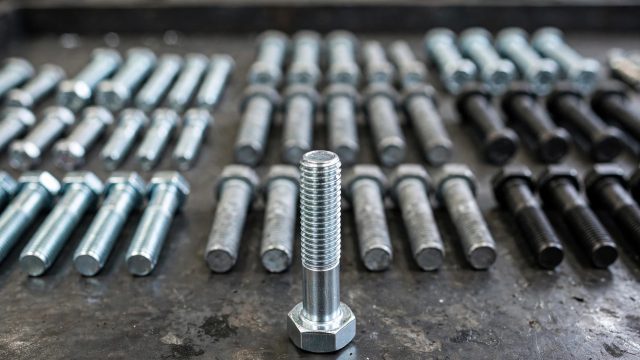
DIN 933 is the German national standard for fully threaded hex bolts. ISO 4017 is the international standard that replaced it in most European specifications. Both describe the same product type: a hexagon head bolt threaded along the full shank.
DIN 933 was formally withdrawn in Germany, but it is still widely used in purchase orders, price lists and distributor catalogs.
Dimensional differences
The main difference is the width across flats (s) in four sizes. This affects which wrench fits the bolt head.
| Size | DIN 933 s (mm) | ISO 4017 s (mm) |
|---|---|---|
| M10 | 17 | 16 |
| M12 | 19 | 18 |
| M14 | 22 | 21 |
| M22 | 32 | 34 |
When to specify which
Follow the project specification
If the drawing or specification names a standard, order that standard. Substitution needs written approval from the engineer.
For distribution stock
Check what your customers ask for. Many markets still order by DIN number even when ISO parts are acceptable.
Note: Mixing DIN and ISO bolts in one assembly can cause wrench mismatch on site. Keep one standard per project.
How to write it on your RFQ
State the standard, size, length, property class and finish in one line, for example: ISO 4017 M12×60, 8.8, zinc plated.